
DO NOT Baby Your Back... Build It
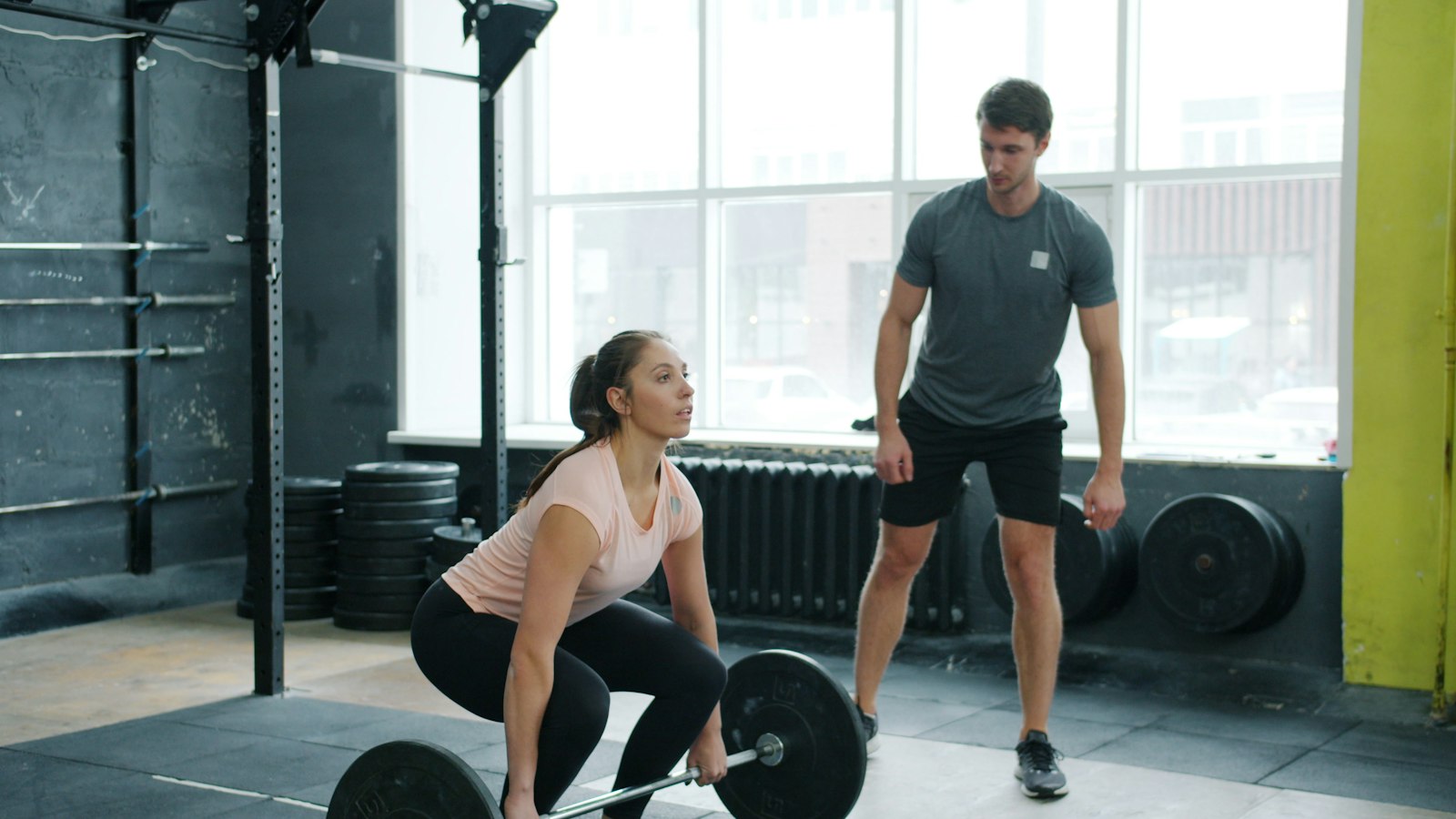
You tweak your back lifting a hockey bag, or on the last rep of a set of deadlifts. The first instinct is to protect it. Stop lifting. Stop bending. Find someone to crack it back into place.
That instinct makes sense. It's also one of the reasons back pain hangs around longer than it should.
So what gets you better, and keeps you better? Here's how I approach low back pain, and the research behind it.
No. 1: Your Spine Is Not Fragile
Everything I do with a sore back starts with movement optimism. It's the expectation, backed by evidence, that your back is strong, adaptable and safe to move, even while it hurts.
That optimism comes after serious causes are ruled out. Some back pain has a specific medical cause, such as cancer, infection, trauma or inflammatory disease, and screening for these is part of best-practice care [1, 2]. Once they're off the table, the picture is usually far less scary than people expect.
Scans are a big source of fear. A systematic review of 3,110 people with no back pain found disc degeneration in 37% of 20-year-olds and 96% of 80-year-olds. Disc bulges showed up in 30% of 20-year-olds and 84% of 80-year-olds [3]. The authors concluded that many of these findings are likely part of normal aging and unrelated to pain. Think of them as wrinkles on the inside.
The natural course is encouraging too. In people with a new episode of back pain, average pain fell from 52 out of 100 at onset to 23 at six weeks and 6 at one year [4]. Persistent back pain improves more slowly: in that group, average pain was still 23 out of 100 a year later [4]. That's where the right plan matters most.
Why this matters: If you believe your back is damaged, you move like it's damaged. You guard it and stiffen up, and that pattern can keep pain going long after the tissue has settled.
No. 2: A Rounded Back Isn't the Villain
"Lift with a straight back" might be the most repeated piece of back advice there is. As a rule for preventing pain, the research doesn't support it.
A 2020 systematic review asked whether bending through the lower back during lifting is a risk factor for back pain. Nine of the 11 studies found no significant difference in lower back bending between people with and without pain. In seven of them, people with back pain actually lifted with about 6 degrees less lower back bending than people without it [5].
I'm transparent about the limits here. The authors rated the evidence as low quality, and most of the studies were snapshots in time, so they can't show what came first. Their conclusion: more lower back bending during lifting was not a risk factor for back pain starting or sticking around [5].
Why this matters: Technique still matters under heavy load in the gym. But treating every bend as a threat teaches your back to brace through tasks it can easily handle, like tying your skates or picking up your kid.
No. 3: Re-expose, Don't Avoid
Avoiding what hurts feels sensible. The problem is that avoidance spreads. You stop deadlifting. Then you stop bending to load the dishwasher. Then you're nervous getting out of the car.
Movement re-exposure reverses that. We pick the movements you've been avoiding and bring them back gradually, in doses you can control, so your nervous system relearns that they're safe. It's like getting back on a bike after a crash. You start in an empty parking lot, not on the highway.
This is the "exposure with control" part of cognitive functional therapy (CFT), an approach built on three pieces: making sense of your pain, graded exposure to painful or feared tasks, and lifestyle change [6]. During exposure, you practise the movement while deliberately letting go of the protective habits that come with fear, like holding your breath and guarding through your trunk [6].
Why this matters: Every movement you take back is proof that your back can handle it. That kind of proof does more for how you move than being told it's fine.
No. 4: Strength Training Over Passive Treatment
Passive treatment is anything done to you: spinal manipulation, massage, ultrasound, TENS (a small electrical stimulation unit), traction. Active treatment is what you do yourself, with strength training at the centre.
The guidelines are clear on the passive end. The UK's NICE guideline, updated in July 2026, says not to offer ultrasound, TENS, interferential therapy, traction, or belts and corsets for low back pain. It recommends considering manual therapy only as part of a treatment package that includes exercise [1]. A review of high-quality guidelines for musculoskeletal pain landed in the same place: use manual therapy only as an add-on to other treatments [2].
To be fair to manual therapy, it isn't useless. Spinal manipulation gives effects similar to other guideline-recommended treatments for chronic back pain [7], and the Cochrane review found no difference in pain between exercise and manual therapy [8]. Hands-on treatment can calm things down enough to start training. That's the role I see for it: an on-ramp to the plan.
Here's why I build the plan around strength. Compared with no treatment, usual care or placebo, exercise reduced chronic back pain by about 15 points on a 100-point scale, and it probably beats electrotherapy or education on their own [8]. A network meta-analysis of exercise trials ranked resistance training at or near the top for physical function and mental health (Pilates ranked first for pain). It also found exercise may be more effective than hands-on treatment, though the evidence quality was low [9].
Why this matters: Manual therapy rents you relief, and only while someone is treating you. The strength you build is yours. It comes home with you, and it keeps paying off for as long as you keep training.
Why I'm Confident in This Approach
Two studies do most of the work here.
The first is the RESTORE trial, published in The Lancet in 2023. It randomised 492 adults with chronic, disabling back pain across 20 physiotherapy clinics. People who received CFT, up to seven sessions over 12 weeks plus a booster at 26 weeks, improved 4.6 points more on a 24-point disability scale than people who had usual care. The effect held at one year, at a lower overall cost to society [10].
The second is about keeping pain away. A meta-analysis of 21 trials with 30,850 people found that exercise combined with education cut the risk of a new episode of back pain by 45% at follow-ups of up to a year (moderate-quality evidence). Education alone, back belts and shoe insoles didn't prevent back pain. Beyond a year, the protection from exercise and education shrank, and for exercise alone it disappeared [11]. That's why I want you to keep training after the pain settles.
The Bottom Line
- Your back is far stronger than a scan report makes it sound.
- A rounded back isn't the danger it's made out to be. Avoiding movement is the bigger problem.
- Take back the movements you've been avoiding, gradually and in doses you control.
- Hands-on treatment can be a useful add-on. Strength training is the plan.
- Keep training once the pain settles.
If back pain is holding back your training or your sport, book an assessment and we'll build your plan together.
References
-
National Institute for Health and Care Excellence. Low Back Pain and Sciatica in Over 16s: Assessment and Management. NICE Guideline NG59. London: NICE, 2016, last updated July 29, 2026. https://www.nice.org.uk/guidance/ng59
-
Lin, Ivan, Louise Wiles, Rob Waller, Roger Goucke, Yusuf Nagree, Michael Gibberd, Leon Straker, Chris G. Maher, and Peter P. B. O'Sullivan. "What Does Best Practice Care for Musculoskeletal Pain Look Like? Eleven Consistent Recommendations from High-Quality Clinical Practice Guidelines: Systematic Review." British Journal of Sports Medicine 54, no. 2 (2020): 79–86. https://doi.org/10.1136/bjsports-2018-099878
-
Brinjikji, W., P. H. Luetmer, B. Comstock, B. W. Bresnahan, L. E. Chen, R. A. Deyo, S. Halabi, et al. "Systematic Literature Review of Imaging Features of Spinal Degeneration in Asymptomatic Populations." American Journal of Neuroradiology 36, no. 4 (2015): 811–816. https://doi.org/10.3174/ajnr.A4173
-
da C. Menezes Costa, Luciola, Christopher G. Maher, Mark J. Hancock, James H. McAuley, Robert D. Herbert, and Leonardo O. P. Costa. "The Prognosis of Acute and Persistent Low-Back Pain: A Meta-Analysis." Canadian Medical Association Journal 184, no. 11 (2012): E613–E624. https://doi.org/10.1503/cmaj.111271
-
Saraceni, Nic, Peter Kent, Leo Ng, Amity Campbell, Leon Straker, and Peter O'Sullivan. "To Flex or Not to Flex? Is There a Relationship Between Lumbar Spine Flexion During Lifting and Low Back Pain? A Systematic Review With Meta-analysis." Journal of Orthopaedic & Sports Physical Therapy 50, no. 3 (2020): 121–130. https://doi.org/10.2519/jospt.2020.9218
-
Kent, Peter, Peter O'Sullivan, Anne Smith, Terry Haines, Amity Campbell, Alison H. McGregor, Jan Hartvigsen, et al. "RESTORE—Cognitive Functional Therapy with or without Movement Sensor Biofeedback versus Usual Care for Chronic, Disabling Low Back Pain: Study Protocol for a Randomised Controlled Trial." BMJ Open 9, no. 8 (2019): e031133. https://doi.org/10.1136/bmjopen-2019-031133
-
Rubinstein, Sidney M., Annemarie de Zoete, Marienke van Middelkoop, Willem J. J. Assendelft, Michiel R. de Boer, and Maurits W. van Tulder. "Benefits and Harms of Spinal Manipulative Therapy for the Treatment of Chronic Low Back Pain: Systematic Review and Meta-analysis of Randomised Controlled Trials." BMJ 364 (2019): l689. https://doi.org/10.1136/bmj.l689
-
Hayden, Jill A., Jenna Ellis, Rachel Ogilvie, Antti Malmivaara, and Maurits W. van Tulder. "Exercise Therapy for Chronic Low Back Pain." Cochrane Database of Systematic Reviews 9, no. 9 (2021): CD009790. https://doi.org/10.1002/14651858.CD009790.pub2
-
Owen, Patrick J., Clint T. Miller, Niamh L. Mundell, Simone J. J. M. Verswijveren, Scott D. Tagliaferri, Helena Brisby, Steven J. Bowe, and Daniel L. Belavy. "Which Specific Modes of Exercise Training Are Most Effective for Treating Low Back Pain? Network Meta-analysis." British Journal of Sports Medicine 54, no. 21 (2020): 1279–1287. https://doi.org/10.1136/bjsports-2019-100886
-
Kent, Peter, Terry Haines, Peter O'Sullivan, Anne Smith, Amity Campbell, Robert Schutze, Stephanie Attwell, et al. "Cognitive Functional Therapy with or without Movement Sensor Biofeedback versus Usual Care for Chronic, Disabling Low Back Pain (RESTORE): A Randomised, Controlled, Three-Arm, Parallel Group, Phase 3, Clinical Trial." The Lancet 401, no. 10391 (2023): 1866–1877. https://doi.org/10.1016/S0140-6736(23)00441-5
-
Steffens, Daniel, Chris G. Maher, Leani S. M. Pereira, Matthew L. Stevens, Vinicius C. Oliveira, Meredith Chapple, Luci F. Teixeira-Salmela, and Mark J. Hancock. "Prevention of Low Back Pain: A Systematic Review and Meta-analysis." JAMA Internal Medicine 176, no. 2 (2016): 199–208. https://doi.org/10.1001/jamainternmed.2015.7431
This article is educational content and general information. It is not individual medical advice. For assessment and treatment specific to you, consult a qualified health professional.